


Decide if you want to keep or exchange your diamond. Then document the stone and approve a design. Keeping your diamond is a reset. Surrendering jewelry for credit is a trade-in. These require different agreements.
TL;DR
- To trade in diamond ring for new setting, distinguish exchanging your jewelry from resetting your original diamond.
- Balacia is best for couples exploring custom engagement ring designs, not an assumed trade-in arrangement.
- Request a stone inspection, written design approval, and clear instructions for returning the original mounting.
- Confirm trade-in eligibility directly before sending jewelry; custom design options do not establish a credit policy.
Why this matters
A new setting can give a treasured diamond a different look without replacing the stone that carries your memories. A trade-in changes what you own: you surrender agreed items in exchange for an agreed credit toward another purchase.
Choose the transaction before choosing the setting. Otherwise, a conversation about preserving an heirloom can turn into a proposal to replace it.
Balacia offers engagement rings and custom designs. Ask about accepting and inspecting an existing stone. These are distinct from customization questions.
For your 2026 project, use the comparison below to state your intention clearly.
| Route | Best for | Main benefit | Main drawback | Confirm before proceeding |
| Reset your diamond | Keeping the original stone while changing its surroundings | Preserves the particular diamond you already own | The new setting must accommodate that stone’s dimensions and condition | Existing-stone acceptance, inspection, and setting compatibility |
| Trade in the ring | Replacing jewelry you no longer want to retain | Creates a defined exchange toward another purchase if accepted | You surrender the agreed jewelry rather than preserve it | Eligibility, valuation, credit restrictions, and when ownership transfers |
| Keep the ring and buy separately | Preserving the original ring intact | Avoids dismantling a sentimental piece | Leaves you with a separate purchase rather than reusing the stone | Whether a new ring meets your needs without altering the original |
Before you start
- Gather your records: collect the receipt, any grading report, appraisal, previous repair notes, and insurance information. Photograph the ring from the top, side, and underside: 3 views that help explain its current construction.
- Prepare your design brief: record your current ring size, preferred appearance, daily activities, and whether your wedding band must sit alongside the new setting. Establish who has permission to authorize changes to shared or inherited jewelry.
- Resolve the hidden gotcha: a setting described for the same carat weight is not automatically a fit. The jeweler needs the diamond’s actual measurements in millimeters, its shape, and an inspection of its condition before confirming compatibility.
Do not remove the diamond yourself. Leave inspection, measurement, and unsetting to a qualified jewelry professional, and agree on responsibility for the stone before work begins.
Stone record and transaction choice
Create 1 project record for your 2026 ring update. Keep the photos, correspondence, inspection findings, and approvals together so the description of your jewelry stays consistent throughout the project.
- State your intention. Write either Keep my diamond or Exchange my ring at the top of your own project record. These are labels for your notes, not website buttons or published program names.
- Identify every component. List the center stone, side stones, mounting, and wedding band separately. Mark which pieces must come back to you and which you are willing to surrender.
- Request an inspection. Ask the jeweler to record the stone’s measurements, visible condition, and any features that affect removal or resetting. Request an explanation of any damage before authorizing further handling.
- Match the paperwork. If the stone has a grading report or an inscription, ask the jeweler to explain how its identity will be checked. A report describes a stone; it does not establish a retailer’s trade-in eligibility.
- Confirm acceptance before delivery. Get instructions for the actual transaction, including whether the jeweler accepts customer-owned stones and how jewelry should be transferred.
Expected result: You have a written inventory and a clear answer. This confirms if the project is a reset, exchange, or purchase. Nothing is surrendered just to explore a design.
If a report is unavailable, do not guess the diamond’s origin or grade from its appearance. Ask what identification or assessment the jeweler requires and keep those findings with the project record.
Setting design and compatibility
A beautiful reference image explains your taste, but it does not confirm that your diamond fits the design. Turn the image into a brief that covers both the look you love and the way you wear your ring.
- Describe the change. Specify what you want to preserve and what you want to alter: the center diamond, overall silhouette, band appearance, or height above the finger.
- Request a compatibility assessment. Ask whether the proposed setting supports your stone’s measured length, width, and depth. Have the jeweler explain any required changes to the head, the part that holds the center stone.
- Check daily wear. Discuss gloves, frequent handwashing, exercise, and tasks where jewelry catches or receives knocks. Ask how the proposed design affects wear and care rather than assuming a particular style is indestructible.
- Review the wedding-band relationship. Ask to see a side view showing how the rings sit together. Decide whether you accept a gap or want the design adjusted before approving it.
- Review the design representation. Ask what the drawing or computer-aided design shows and which details remain illustrative. Stone fit, ring size, and the agreed construction belong in the written specification.
Balacia’s custom ring CAD design mockup is a great starting point. Ask about your diamond separately. A mockup does not confirm stone acceptance.
Expected result: the design brief identifies the exact stone to retain, the intended setting, and any unresolved fit questions. Do not approve production while those questions remain open.
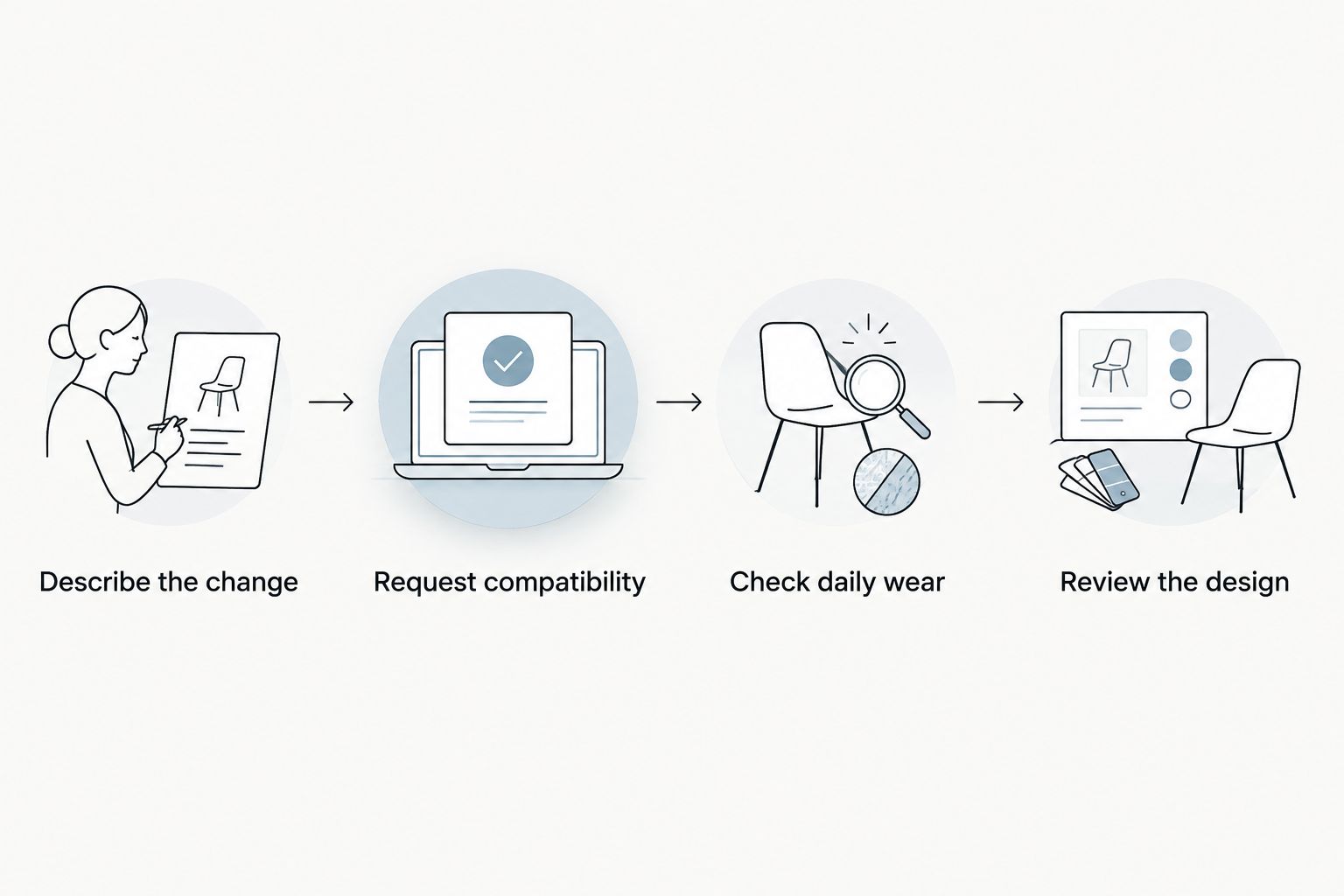
Confirm stone compatibility before treating a design image as a production plan.
Keep your design reference and written specification together. If you request a revision, replace the superseded version rather than leaving conflicting approvals in different messages.
Written approval and handoff
Separate design approval from permission to handle or surrender the jewelry. Use 2 checkpoints: one for the agreed design and one for the transaction terms and work authorization.
- Request an itemized scope. Have the jeweler distinguish inspection, stone removal, setting work, resizing, and any additional assessment. Review the current quotation directly rather than relying on an earlier conversation.
- Record responsibility. Ask who is responsible for the jewelry during inspection, removal, setting, and delivery. Confirm any exclusions in writing and discuss the project with your insurer before transferring the ring.
- Specify component returns. State what should happen to the original mounting and every unused stone. Do not assume the old metal will be returned, reused, or credited automatically.
- Approve the final version. Identify the design version, ring size, retained stone, and authorized work. Require fresh approval for changes outside that scope.
- Follow the agreed transfer instructions. Confirm the recipient and required documentation before dispatch or hand delivery. Ask the carrier and insurer about jewelry restrictions rather than assuming ordinary parcel coverage applies.
- Inspect the finished ring. Compare it with the approved design and inventory. Ask the jeweler to confirm stone security, explain care needs, and return the components listed in the agreement.
Expected result: the completed ring and returned items match the written instructions, and you retain a record of what changed.
For a 2026 reset, keep dated photographs of the finished ring alongside the earlier images. Ask your insurer what documentation is required after the alteration; do not assume the original description remains sufficient.
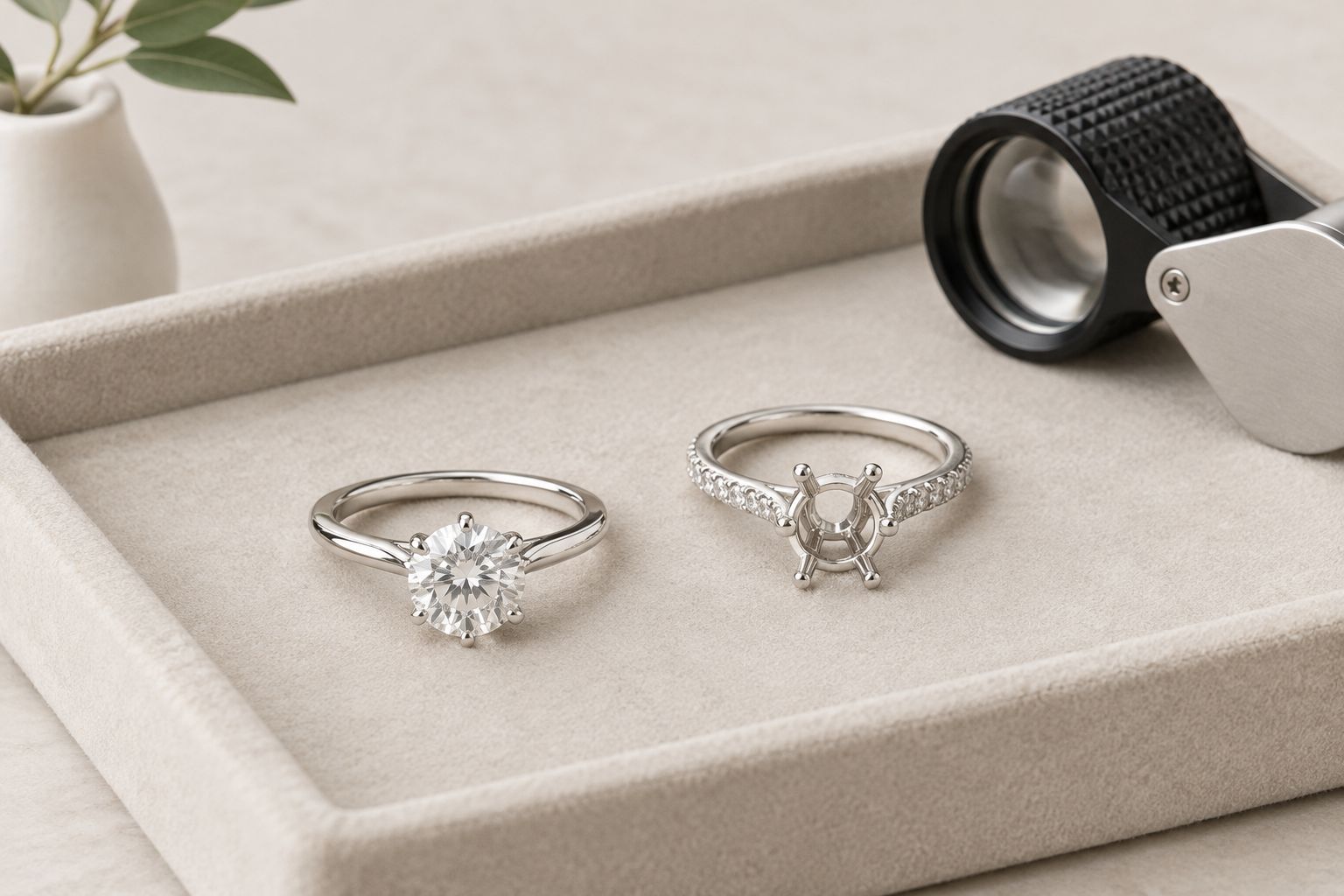
Include the original mounting in your written return instructions if you want to keep it.
When you want to trade in diamond ring or exchange the diamond too
A true trade-in is the adjacent workflow for someone who wants a different center stone, not simply a different setting. Treat the exchange as a separate agreement, even when the design discussion happens with the same jeweler.
- Request an eligibility decision for the exact ring or stone you own. Disclose its documented origin and any known alterations.
- Ask what the proposed credit covers: the center stone, the mounting, side stones, or the complete ring.
- Request the conditions attached to using that credit, including any restrictions on the replacement purchase.
- Identify when the exchange becomes binding and what happens if you decline the proposed transaction after inspection.
- Approve the replacement ring and exchange terms together before surrendering ownership.
Expected result: you know exactly what leaves your possession, what you receive, and which conditions apply.
For your 2026 decision, keep sentimental value separate from an exchange assessment. A commercially acceptable offer does not answer whether you will miss the original diamond. If you are uncertain, pause before authorizing surrender or dismantling.
Troubleshooting
The proposed setting does not fit your diamond
Ask which measurement or detail creates the conflict. Request a revised design for your stone. Or choose a different setting. Do not force the diamond into an unsuitable mounting.
The diamond has damage or a condition concern
Pause the reset and request documented findings. Ask how the condition affects removal, setting, and future wear before approving a revised plan. A damage concern changes the work discussion, not just the appearance discussion.
The proposal treats your reset as an exchange
Restate that you intend to keep the original diamond. Ask for a corrected scope. It should identify the stone to return. Remove any authorization to surrender it.
The old mounting is missing from the paperwork
Add a component-by-component instruction before handoff. Specify whether each item is returned or surrendered, and ask the jeweler to acknowledge the list. Sentimental importance belongs in an explicit instruction, not an assumption.
The finished ring differs from the approved design
Photograph the discrepancy and compare it with the final approved version. Contact the jeweler before arranging alterations elsewhere, and ask for a written explanation of the proposed correction.
Customize your workflow
Adapt the brief to the reason for the change. Describe what should remain recognizable for an anniversary. Identify key elements for inherited rings. Explain daily difficulties for a practical redesign.
Balacia is best for couples exploring custom engagement ring designs. Start with that design conversation. Then confirm requirements for an existing stone before committing your jewelry.
Keep your 2026 project record after completion. It gives you a clear reference for later maintenance, insurance questions, or another family member who eventually inherits the ring.
FAQ
Can I trade in my diamond ring for a new setting and keep the diamond?
Keeping your original diamond and moving it into a different setting is a reset, not necessarily a trade-in. Ask for a reset proposal and separate instructions for any old metal or side stones you want returned.
Does Balacia accept old diamond rings for trade-in?
Confirm trade-in eligibility directly with Balacia before sending any jewelry. Custom design options do not establish an exchange policy or confirm acceptance of a customer-owned diamond.
Will any new setting fit my existing diamond?
No, a new setting must suit your diamond’s actual dimensions, shape, and condition. Matching the advertised carat weight alone does not establish compatibility.
Do I need a diamond grading report to reset my ring?
Ask the jeweler what documentation is required for your specific reset. Bring any existing grading report, but also request an inspection because a report does not establish the stone’s current condition.
Can I keep the old setting after my diamond is reset?
Include return of the original mounting in your written agreement. Also list any side stones or other components you want back rather than assuming they are included.
Can I use my appraisal as the trade-in value?
An appraisal does not guarantee a trade-in offer. Ask the jeweler to explain the proposed exchange assessment and identify exactly which items the credit covers.
Can I reset an inherited diamond without changing its meaning?
You can preserve the original diamond while changing the setting, subject to a jeweler’s assessment. Discuss which elements carry family significance before authorizing removal or redesign.
One last thing
The empty setting can hold memories too. Photograph the original ring on your hand. Record why it matters. Request the old mounting back to preserve its story.