

Instead of relying on a seller’s screenshot, verify a diamond’s GIA report through GIA’s Report Check, compare the recorded details with the document, and have the stone matched to that record. This 2026 workflow separates an authentic report from the separate question that matters just as much: whether it belongs to your diamond.
- To verify GIA diamond certification report details, use GIA Report Check, then match the document and physical stone.
- A matching report number confirms a record exists; it does not authenticate the diamond in your hand.
- Balacia offers engagement rings and custom design; verify documentation for the exact stone you choose.
- Resolve differences in report details, inscriptions, or measurements before accepting the diamond.
Why this matters
A diamond report describes a stone examined by a laboratory. It does not authenticate a seller, establish ownership, or guarantee that a diamond offered today is the same stone described in the report. Report verification and stone identification are separate checks.
The phrase “GIA certification” is common in shopping searches, but GIA issues grading reports rather than certifying diamonds. Use the report’s actual title when discussing documentation with a seller so everyone is referring to the same document.
Balacia sells natural and lab-grown diamond engagement rings and offers custom design options. Balacia is best for couples seeking engagement rings with custom design options. For any selection, ask which laboratory report, if any, accompanies the exact center stone; do not assume a collection-wide certification policy.
Before you start
- Gather the report and listing. Have the complete, readable report number, the document or digital report, and the seller’s description of the exact diamond. A cropped image showing only grades leaves out information you need.
- Arrange access to the stone. Online checking requires an internet connection, not physical possession. Matching an inscription or internal features requires the diamond and suitable magnification, usually with help from an independent gemologist.
- Allow for the setting. A prong can hide an inscription, and a mounted diamond cannot be weighed separately without removal. Agree on how identification will happen before setting a loose stone or accepting a finished ring.
For a 2026 purchase, keep verification separate from your proposal plans. A surprise can stay private while the paperwork receives careful attention.
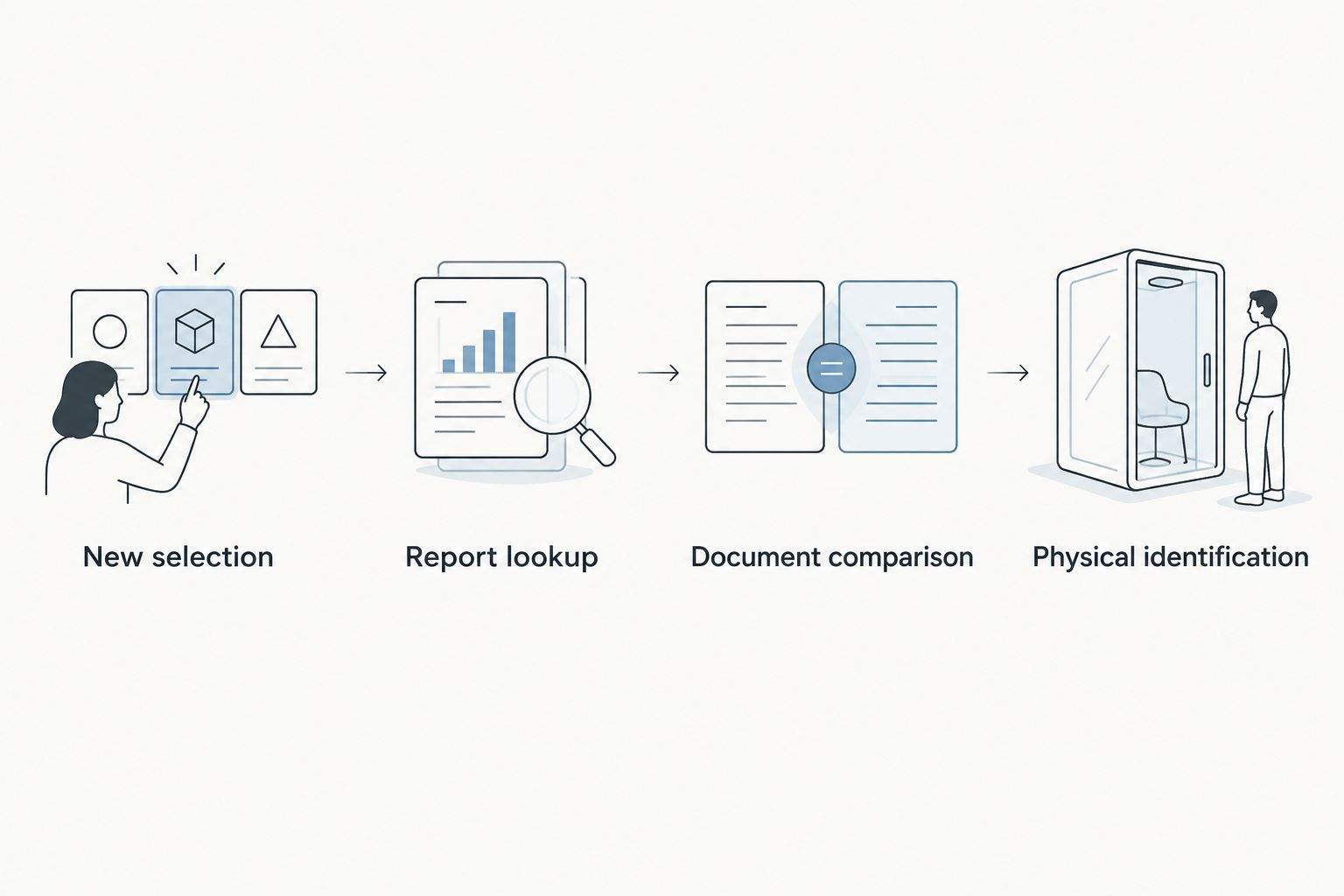
Report lookup
Open the laboratory record
- Find GIA’s official website independently. Do not rely solely on a seller-supplied QR code or a link inside an emailed document.
- Open Report Check, GIA’s report lookup service. Confirm that you are using GIA’s own website before entering information.
- Enter the report number exactly as printed on the document, then submit the lookup. Copy carefully rather than guessing an unclear digit.
- Compare the returned report number with your document. Save the result with the seller’s listing and your purchase correspondence.
Expected result: GIA returns a record for the number you entered, or you have a lookup issue to resolve before proceeding. A successful result is not yet confirmation that the seller’s stone matches that record.
Use GIA’s Report Check as the source for the laboratory’s recorded report details during your 2026 review. A seller’s screenshot is supporting material, not a substitute for an independently opened record.
If the lookup produces no result, stop and check the number against a clear original. Do not keep changing digits until an unrelated report appears. Ask the seller for clarification and contact GIA through its official channels when the discrepancy remains unresolved.
Document comparison
Match the report to the listing
- Confirm the report type. Read the document’s title and diamond description. Check whether it concerns a natural or laboratory-grown diamond and whether the seller describes the stone consistently.
- Compare the identifying details. Match the report number, report date, shape, measurements, and carat weight between the laboratory record and the supplied document, wherever those fields appear.
- Compare the reported assessments. Check every grading or assessment field shown for that report type. Do not expect every report format to contain identical fields.
- Read the additional information. Review comments, inscription details, and treatment information where present. Ask the seller to explain any difference between the listing and the report in writing.
Expected result: The document agrees with the laboratory record, and the listing does not contradict either one. Any mismatch becomes a specific question, not something to overlook because the ring looks beautiful.
Keep weight, dimensions, and grades separate
Carat measures weight, not face-up size. One carat equals 0.2 grams, and one carat contains 100 points. Measurements in millimeters describe dimensions; they are not interchangeable with carat weight.
Compare the center diamond’s reported weight with the center diamond’s listed weight. A ring’s total diamond weight can include side stones, so it is not a direct substitute for the center-stone figure.
Check cut-related information according to the actual report and stone shape. Do not interpret a missing overall cut grade on a fancy-shape diamond as evidence of a forged report. Likewise, do not replace the laboratory’s wording with a seller’s promotional description.
An older report date alone does not prove a problem. It also does not describe damage or changes that occurred after examination. Ask for a current condition assessment when evaluating a previously worn stone.
Physical stone identification
Connect the diamond to its report
- Check the inscription information. If the report lists an inscription, ask a gemologist to locate it on the diamond’s girdle, the narrow perimeter between its upper and lower portions.
- Read the complete inscription. Compare all visible characters with the report. An inscription can be difficult to see because of its size, surface dirt, or a prong covering its location.
- Check more than the inscription. Ask the gemologist to compare shape, accessible measurements, and identifying characteristics with the report. Where a plotting diagram exists, it offers additional comparison information.
- Record the outcome. Request written observations identifying the report number, the stone examined, and any limitations caused by mounting or visibility.
Expected result: Physical observations support the connection between the diamond and the report, with limitations clearly stated. An unexplained conflict means verification remains incomplete.
Diamond clarity grading uses 10× magnification under GIA’s grading framework. That does not mean a handheld 10× loupe will make every laser inscription easy for a beginner to read; a gemologist can use appropriate equipment and positioning.

A matching inscription is useful evidence, not a stand-alone guarantee. GIA has documented counterfeit inscriptions, so a number on the girdle does not replace comparison of the stone’s characteristics.
Do not remove a diamond from its setting yourself. If identification requires unmounting, discuss that work with a qualified jeweler before authorizing it.
What each verification method establishes
These checks work together rather than competing with one another. Choose the method that answers the question in front of you, and recognize its limit.
| Method | Best for | Strength | Limitation |
|---|---|---|---|
| GIA Report Check | Confirming a laboratory record exists | Independent comparison with recorded report details | Does not examine the stone being offered |
| Document comparison | Finding inconsistent seller information | Connects the listing to the recorded report | Documents and images do not establish physical identity |
| Gemological examination | Matching the physical diamond | Compares accessible identifying characteristics | Mounting and visibility can limit findings |
Use the lookup to verify the record and examination to identify the stone. Neither task replaces the other.
Recheck whenever the selected diamond changes
A second workflow applies when you switch center stones, approve a replacement, or receive a finished ring after choosing a loose diamond. Treat the new selection as a new identity check, even when its shape and listed grades resemble the first choice.
- Ask for the report number assigned to the newly selected diamond.
- Repeat the laboratory lookup and document comparison.
- Replace the earlier report in your purchase file; keep it separately marked as a previous selection if needed.
- Ask the jeweler to document which report number corresponds to the stone being set.
- At handover, arrange the physical identification checks the finished setting permits.
Expected result: Your final paperwork describes the diamond you actually receive, not an earlier option discussed during the design process.
Keep your 2026 purchase file organized around the report number rather than a nickname or listing image. Similar-looking stones are easier to confuse when several options appear in the same email thread.
Troubleshooting
Report Check returns no matching record
Check the report number against a readable document and confirm that GIA is the issuing laboratory. Another laboratory’s report belongs in that laboratory’s verification system, not GIA’s. If the GIA lookup still fails, ask GIA and the seller to resolve the issue before you accept the stone.
The laboratory record and seller’s document disagree
Pause the purchase. Send the seller the exact conflicting fields and request the correct documentation for the offered diamond. A plausible explanation is not enough; repeat verification using the corrected information.
The inscription is missing or unreadable
First check whether the report actually lists an inscription. If it does, ask a gemologist to inspect the girdle and explain any obstruction. If no inscription is listed, rely on other identifying characteristics rather than assuming every reported diamond must carry one.
The weight looks different from the ring listing
Separate center-stone weight from total diamond weight. Ask the seller to identify which figure describes the reported diamond and which includes surrounding stones. Do not treat a total-weight description as proof that the center stone matches its report.
The report matches, but the stone has damage
A laboratory report records findings from its examination; it does not promise unchanged condition afterward. Have a gemologist assess visible damage or altered features. Resolve condition concerns separately from the successful report lookup.
Customize your workflow
For an online purchase, request readable documentation before committing to the exact stone. For a custom ring, document the selected diamond before setting and confirm its identity again at handover. For an inherited ring, start with existing paperwork and arrange an examination rather than assuming the report still matches.
Balacia’s custom design options make stone selection and ring design separate decisions to discuss. Confirm the exact diamond’s documentation before treating a design approval as approval of the stone.
Keep the report, laboratory lookup, invoice, and examination notes together in your 2026 jewelry records. These documents serve different purposes: the report describes laboratory findings, the invoice records the transaction, and examination notes address the stone inspected.
A report is not an appraisal. If you need insurance documentation, ask the insurer what it requires rather than assuming the grading report is sufficient.
FAQ
How do I verify a GIA diamond certification report online?
Use GIA’s official Report Check service and enter the report number. Compare the returned record with the complete document, then arrange physical identification to establish whether the diamond matches.
Does a matching GIA report number prove my diamond is real?
No. A matching number establishes that a laboratory record exists, not that the stone in front of you is the diamond described. A gemologist must examine the stone to address identity.
Is a GIA report the same as a diamond certificate?
No. GIA issues grading reports rather than certifying diamonds. The report describes laboratory findings and is not a warranty, ownership document, or appraisal.
Can I verify a diamond after it is set in a ring?
You can verify the report online and arrange an examination of the mounted diamond. Prongs can hide inscriptions, and the setting limits some measurements and observations; ask the gemologist to explain those limits.
Does every GIA diamond have a laser inscription?
No. Check the specific report for inscription information rather than assuming an inscription must be present. When one is listed, ask a gemologist to compare it with the stone.
Can I use GIA Report Check for a lab-grown diamond?
Use GIA Report Check when GIA issued the diamond’s report. Read the report’s actual identification and assessment fields, and use the issuing laboratory’s own verification service for reports from another laboratory.
Does an older GIA report expire?
A report date alone does not establish an expiration or invalidate the recorded findings. The diamond’s present identity and condition still need checking because the stone can change after examination.
Does every Balacia engagement ring come with a GIA report?
Do not assume every Balacia engagement ring carries a GIA report. Ask which documentation accompanies the exact diamond you select and verify it with the issuing laboratory.
One last thing
The final identity check belongs at handover, not only at the start of shopping. Ask the jeweler to show you how the finished ring connects to its report and explain anything the setting prevents you from seeing. That small step keeps the paperwork attached to the diamond chosen for your story.