


Lab-grown diamond engagement rings in 2026 span ten distinct style categories, and picking the right one comes down to how the stone is set, not just the stone itself. Best overall: Round Brilliant Solitaire. Best for symbolism: Three-Stone Setting. Best for stretching a budget: Halo Setting. Best for daily durability: Bezel Setting.
- The round brilliant solitaire is the best overall lab grown diamond engagement ring pick for 2026 — it maximizes light performance in the simplest setting.
- Halo settings make a smaller lab-grown center stone read larger without raising the carat weight.
- Bezel and cathedral settings protect the stone for people who work with their hands daily.
- Lab-grown diamonds run roughly 60-70% less than a natural diamond of comparable size and grade.
- IGI and GIA grade lab-grown diamonds on the same 4Cs scale used for natural stones.
Why this matters
An engagement ring gets worn every day for years, so the setting decision matters more than most shoppers expect going into it. A Balacia shopper choosing between ten legitimate ring styles needs to know which one fits a specific hand, budget, and lifestyle — not just which one photographs well on Instagram.
Lab-grown diamond engagement rings have become the default choice for a large share of 2026 buyers because the stone itself is chemically and optically identical to a mined diamond, graded on the same cut, color, clarity and carat scale. The style decision below is where the real differentiation happens.
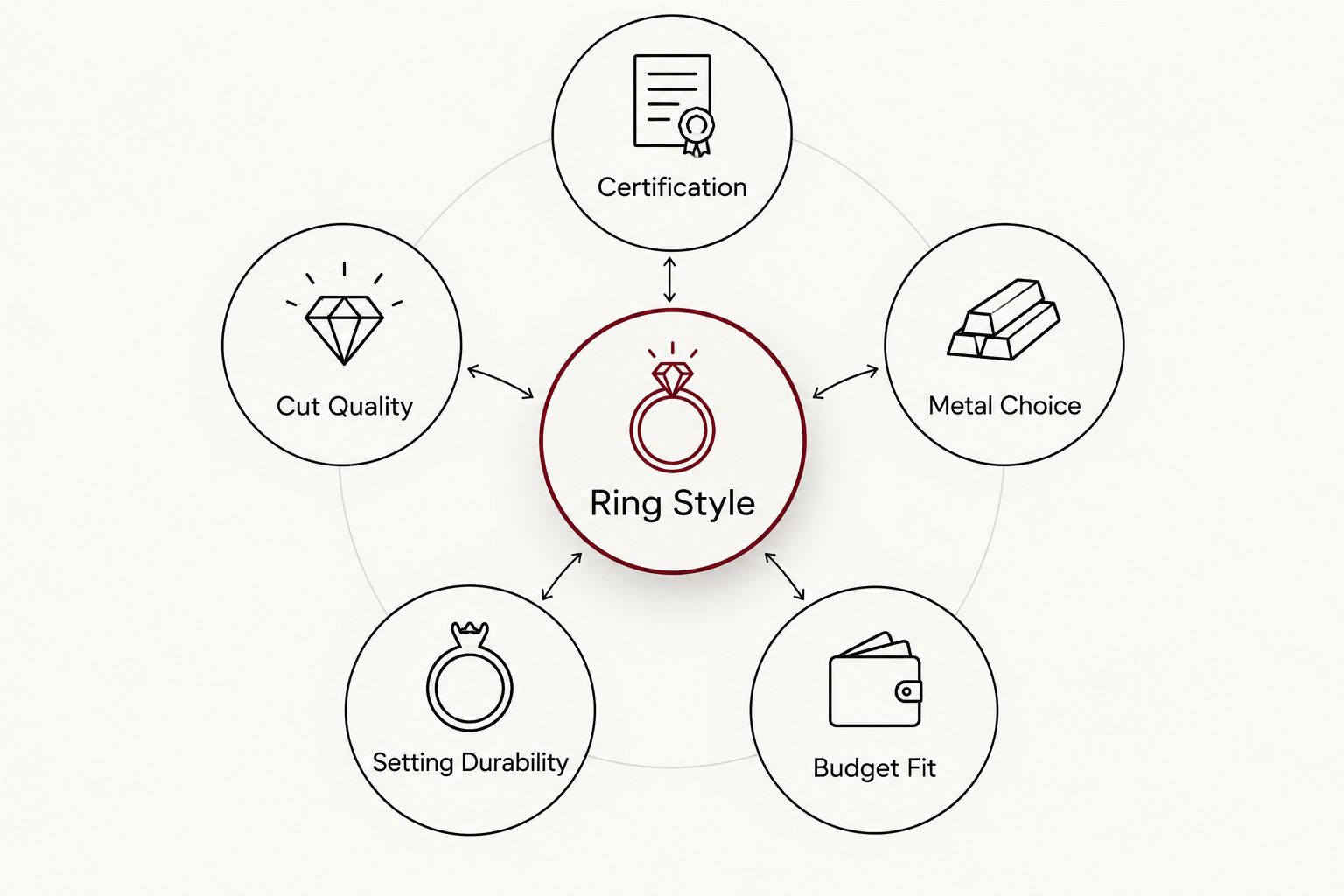
What makes the best lab-grown diamond engagement ring
- Certification from IGI or GIA on the center stone
- Cut quality prioritized over raw carat weight
- Metal purity — 14k, 18k gold, or platinum, matched to how the ring will be worn
- Setting durability for daily wear, not just special occasions
- Color and clarity balance appropriate to the setting style
- Budget flexibility, since lab-grown pricing leaves room for a bigger stone or better cut
Lab-grown diamond engagement rings at a glance
| Style | Best for | Standout feature | Key limitation |
|---|---|---|---|
| Round Brilliant Solitaire | Classic, versatile shoppers | Maximum light return in the simplest setting | Shows inclusions more than fancier cuts |
| Halo Setting | Budget-conscious sparkle | Small stones read larger | Extra prongs need periodic inspection |
| Three-Stone Setting | Symbolic milestones | Past-present-future storytelling | Side stones add resizing complexity |
| Pavé Shank | Extra sparkle, same carat | Diamonds run down the band | Prongs snag on fabric and hair |
| Vintage Milgrain Setting | Antique-inspired detail | Beaded edge texture, filigree accents | Detail work is harder to clean |
| Bezel Setting | Active hands, daily wear | Metal rim shields the stone edge | Slightly less light enters the stone |
| Cathedral Setting | A raised, elegant profile | Arched shoulders lift the center stone | Higher profile catches on gloves |
| Cluster Setting | A bigger look for less | Small stones grouped for size illusion | Harder to clean between stones |
| Tension Setting | Modern, architectural style | Stone appears to float between the shank | Difficult and costly to resize |
| Toi et Moi (Two-Stone) | Personalized, non-traditional | Two stones, one meaning | Asymmetry isn't for everyone |
1. Round Brilliant Solitaire: best lab grown diamond engagement ring for classic shoppers
A single round stone set on a plain or thin pavé band, this is the shape most people picture when they hear "engagement ring." It puts the diamond's cut on full display since nothing competes with it visually.
Round Brilliant Solitaire pros:
- Works with every hand shape and size
- Easiest style to resize later
- Pairs cleanly with almost any wedding band
Round Brilliant Solitaire cons:
- Shows inclusions more readily than a halo or cluster
- Offers no extra sparkle beyond the single stone
Best for: shoppers who want a ring that still looks right in 10 years. Verdict: Buy.
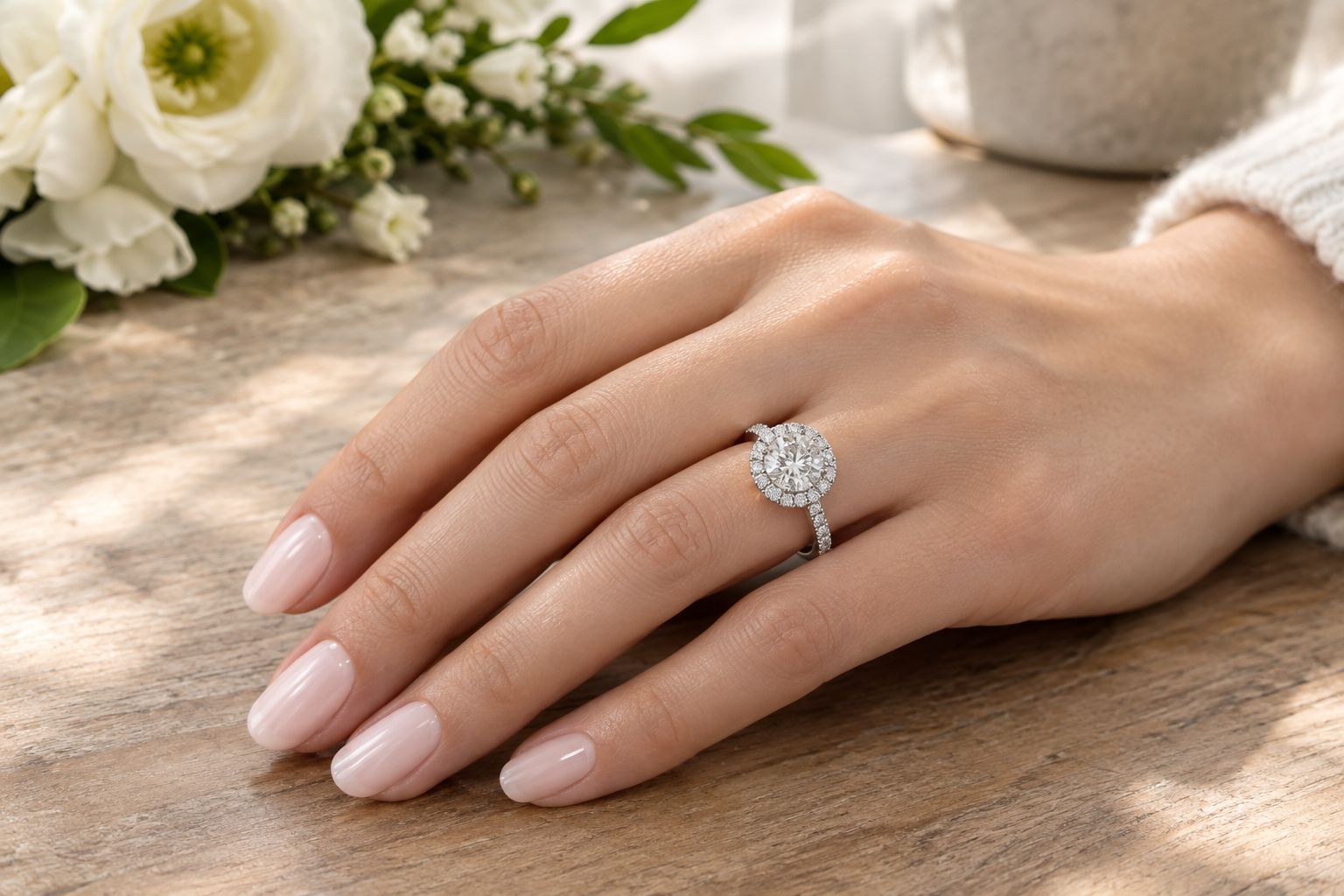
2. Halo Setting: best lab grown diamond engagement ring for stretching a budget
A ring of smaller diamonds surrounds the center stone, adding perceived size and sparkle without increasing the carat weight of the main diamond. It's the go-to move for buyers who want a bigger look at a lower cost.
Halo Setting pros:
- Makes a smaller center stone look substantially larger
- Adds sparkle from multiple angles
- Works well with round, oval, and cushion cuts
Halo Setting cons:
- More prongs mean more places for dust and lotion to collect
- A poorly matched halo can look dated within a few years
Best for: buyers who want visual impact on a tighter budget. Verdict: Buy.
3. Three-Stone Setting: best lab grown diamond engagement ring for symbolism
Three stones sit side by side, traditionally read as past, present and future. It's a style couples pick when the ring needs to carry a specific meaning, not just a look.
Three-Stone Setting pros:
- Built-in symbolism many couples want
- Larger visual footprint across the finger
- Side stones can be smaller, keeping the center stone the focal point
Three-Stone Setting cons:
- Resizing is more involved with three set stones
- Side stone shapes limit which center cuts pair well
Best for: couples who want the ring to tell a story. Verdict: Buy.
4. Pavé Shank: best lab grown diamond engagement ring for extra sparkle, same carat
Small diamonds line the band itself, so sparkle continues past the center stone down the finger. It's a subtle upgrade rather than a bold style change.
Pavé Shank pros:
- Adds sparkle without raising center stone carat weight
- Slims the visual weight of a thicker band
Pavé Shank cons:
- Pavé stones can loosen over years of daily wear
- Requires more frequent professional inspection
Best for: buyers who want continuous sparkle on a simple budget. Verdict: Hold — get it inspected annually if you choose it.
5. Vintage Milgrain Setting: best lab grown diamond engagement ring for antique detail
Beaded metal edging and filigree work give this style an heirloom look straight out of the box, without needing an actual antique stone. It reads as detailed and intentional rather than plain.
Vintage Milgrain Setting pros:
- Distinctive detail that plain solitaires don't offer
- Pairs naturally with vintage-inspired wedding bands
- Reads as an heirloom piece from day one
Vintage Milgrain Setting cons:
- Fine detail work is harder to clean thoroughly at home
- Milgrain edges can wear smoother over decades
Best for: buyers who want an antique look on a 2026 timeline. Verdict: Buy.
6. Bezel Setting: best lab grown diamond engagement ring for active hands
A metal rim wraps fully around the stone's edge instead of prongs, protecting the diamond's girdle from daily knocks. It's the practical choice for anyone who works with their hands or plays sports.
Bezel Setting pros:
- No prongs to catch or snag
- Lowest-maintenance setting on this list
- Protects the stone edge from chips
Bezel Setting cons:
- Slightly less light enters the stone from the sides
- Reads more modern than traditional
Best for: nurses, tradespeople, and anyone who doesn't want to remove a ring for daily tasks. Verdict: Buy.
7. Cathedral Setting: best lab grown diamond engagement ring for a raised profile
Arched shoulders lift the center stone above the band, creating an elegant silhouette that photographs well from the side. It's a style choice as much as a functional one.
Cathedral Setting pros:
- Elegant side profile
- Makes the center stone the visual centerpiece
Cathedral Setting cons:
- Raised profile catches on gloves and tight pockets
- Slightly more exposed than a bezel or flush setting
Best for: buyers prioritizing how the ring looks over how it wears. Verdict: Hold if you work with your hands daily.
8. Cluster Setting: best lab grown diamond engagement ring for a bigger look for less
Several smaller diamonds are grouped tightly to mimic the visual size of one large stone. It's a cost-per-carat move for buyers chasing size over a single flawless stone.
Cluster Setting pros:
- Larger visual footprint for the total carat spent
- Multiple stones spread the sparkle across a wider area
Cluster Setting cons:
- Harder to clean between closely set stones
- Doesn't photograph as a traditional "single stone" ring
Best for: buyers who want size over a single large center diamond. Verdict: Buy.
9. Tension Setting: best lab grown diamond engagement ring for a modern look
The band's own pressure holds the stone in place, so the diamond appears to float with no visible prongs. It's the most architectural option on this list.
Tension Setting pros:
- Striking, minimalist look
- No prongs to catch on clothing
Tension Setting cons:
- Difficult and costly to resize later
- Requires a jeweler experienced specifically with tension mounts
Best for: buyers who are certain of their ring size and want a modern statement. Verdict: Wait until ring size is confirmed and permanent.
10. Toi et Moi (Two-Stone): best lab grown diamond engagement ring for personalization
Two stones sit side by side rather than one center diamond, often mixing shapes or even stone types for a personalized look. It's the least traditional entry on this list.
Toi et Moi pros:
- Highly personal, easy to make one-of-a-kind
- Works well with custom design requests
Toi et Moi cons:
- Asymmetry isn't for every taste
- Harder to pair with a plain wedding band
Best for: couples who want something no one else will have. Verdict: Hold — best discussed as a custom design rather than off-the-shelf.
How we ranked these lab-grown diamond engagement ring styles
Each style above is scored against the same six criteria: certification standard, cut quality, metal purity, setting durability, color/clarity balance, and budget flexibility. A style that wins on durability but loses on resizing ease, like the tension setting, gets flagged honestly rather than glossed over — that's also why the radiant-cut wedding rings guide is worth reading before finalizing a wedding band pairing.
Pairing your ring with a wedding band
Once the engagement ring style is set, the wedding band needs to sit flush against it without gapping. Milgrain and vintage-inspired engagement rings pair naturally with matching milgrain bands, while a plain solitaire gives more flexibility on band choice.
For a groom's band on the same 2026 timeline, alternative metals like the tantalum beveled-edge comfort-fit band offer a durable, low-maintenance option that doesn't require the same certification considerations as a diamond ring.


Which lab-grown diamond engagement ring should you choose?
For most buyers in 2026, the round brilliant solitaire is still the default answer — it's the easiest to resize, the easiest to pair with a wedding band, and it never looks dated. If the budget needs to stretch further, the halo setting delivers more visual size for the same carat weight. If durability against daily hand work matters more than tradition, the bezel setting is the practical pick.
Couples chasing a specific meaning should look at the three-stone setting, and anyone wanting something no one else has should talk to a jeweler about a custom Toi et Moi design rather than buying off a shelf.
FAQ
What's the best lab-grown diamond engagement ring style in 2026?
The round brilliant solitaire is the best overall lab-grown diamond engagement ring style for 2026 because it maximizes light performance and pairs with almost any wedding band. Buyers wanting more visual size for the same carat weight should look at a halo setting instead.
Is a lab-grown diamond engagement ring worth it?
Yes, for most buyers — a lab-grown diamond is chemically and optically identical to a natural diamond and is graded on the same 4Cs scale by IGI and GIA. The main tradeoff is resale value, which runs lower than natural diamonds for both lab-grown and mined stones alike.
How much less do lab-grown diamonds cost than natural diamonds?
Lab-grown diamonds typically cost roughly 60-70% less than a natural diamond of comparable size, cut, and clarity. That gap tends to widen further as carat weight increases.
What's the difference between IGI and GIA certification?
Both IGI and GIA grade diamonds on the same 4Cs — cut, color, clarity, and carat — using standardized lab procedures. IGI grades a larger share of lab-grown stones, while GIA is the longer-established lab historically associated with natural diamonds.
Do lab-grown diamonds pass a diamond tester?
Yes, standard thermal and electrical diamond testers read lab-grown diamonds as diamonds, since the material is the same crystal structure as a natural stone. Distinguishing lab-grown from natural requires specialized lab equipment, not a handheld tester.
What metal is best for a lab-grown diamond engagement ring?
14k gold balances durability and cost for daily wear, while 18k gold and platinum offer more purity at a higher price point. The right choice depends on skin sensitivity, budget, and how often the ring will be worn.
Can I get a custom lab-grown diamond engagement ring?
Yes — custom design options let you choose the setting style, metal, and stone shape rather than picking from a fixed catalog. This is the recommended route for styles like Toi et Moi that need a personalized touch.
Will a lab-grown diamond engagement ring hold its value?
Lab-grown diamonds hold less resale value than natural diamonds of the same size, similar to how most retail jewelry loses value the moment it's purchased. Buyers choosing lab-grown are generally prioritizing size and budget over long-term resale.
One last thing
Most 2026 shoppers focus entirely on carat weight and skip past the setting decision — but the setting is what determines whether the ring survives a decade of daily wear. A bezel setting on a modest lab-grown diamond will outlast a pavé shank on a larger stone if the wearer works with their hands.