

Best overall: round solitaire diamond stud earrings. Best for milestone gifting: a 2 ctw lab-grown pair. Best for understated style: bezel-set studs. This 2026 guide helps you choose by appearance, fit, and diamond origin, with Balacia as a starting point for jewelry gift shoppers.
- Round solitaire diamond stud earrings are the default choice when you want a classic, versatile gift.
- Balacia’s 2 ctw lab diamond stud earrings suit shoppers seeking a milestone gift with a stated total carat weight.
- Choose bezel-set studs for a framed look; choose natural diamonds when geological origin matters to the recipient.
- Check individual stone measurements, metal, setting height, and earring backs before choosing a pair.
Why this matters
The best diamond studs are the pair your recipient wants to put on, not simply the pair with the largest carat weight. A beautiful gift still needs to suit their ear, existing jewelry, and preferred way of fastening earrings.
For your 2026 shortlist, separate three decisions: diamond origin, visible shape, and setting. Lab-grown versus natural describes origin; round versus princess describes shape; prong versus bezel describes how the stone is held. These choices overlap, so the ranked recommendations below are buying routes rather than mutually exclusive products.
What makes the best diamond stud earrings
- Matched appearance: Compare both diamonds for face-up size, color, and overall appearance. A shared total weight does not establish a visually matched pair.
- Cut and shape: Choose a shape the recipient already enjoys, then examine how the diamonds handle light. Shape alone does not establish cut quality.
- Wearable proportions: Look at stone measurements, setting height, and the earrings on an ear. Carat weight measures mass, not diameter.
- Suitable metal: Confirm the exact metal and alloy, especially when the recipient has a known sensitivity. A color description is not a material specification.
- Practical fastening: Check how the backs attach and whether the recipient is comfortable operating them. Fastening style is part of the wearing experience.
- Clear documentation: Confirm diamond origin and any grading details for the actual stones. Never treat a general certification statement as proof for every pair.
Diamond stud earrings at a glance
The first recommendation is a specific product identified in the catalog. The remaining recommendations describe styles to look for, not named products with assumed specifications.
| Pick | Best for | Standout feature | Key limitation |
|---|---|---|---|
| Balacia 2 ctw lab diamond stud earrings | Milestone gifting | Lab-diamond origin and 2 ctw identified in the product URL | Total weight alone does not establish fit or diamond quality |
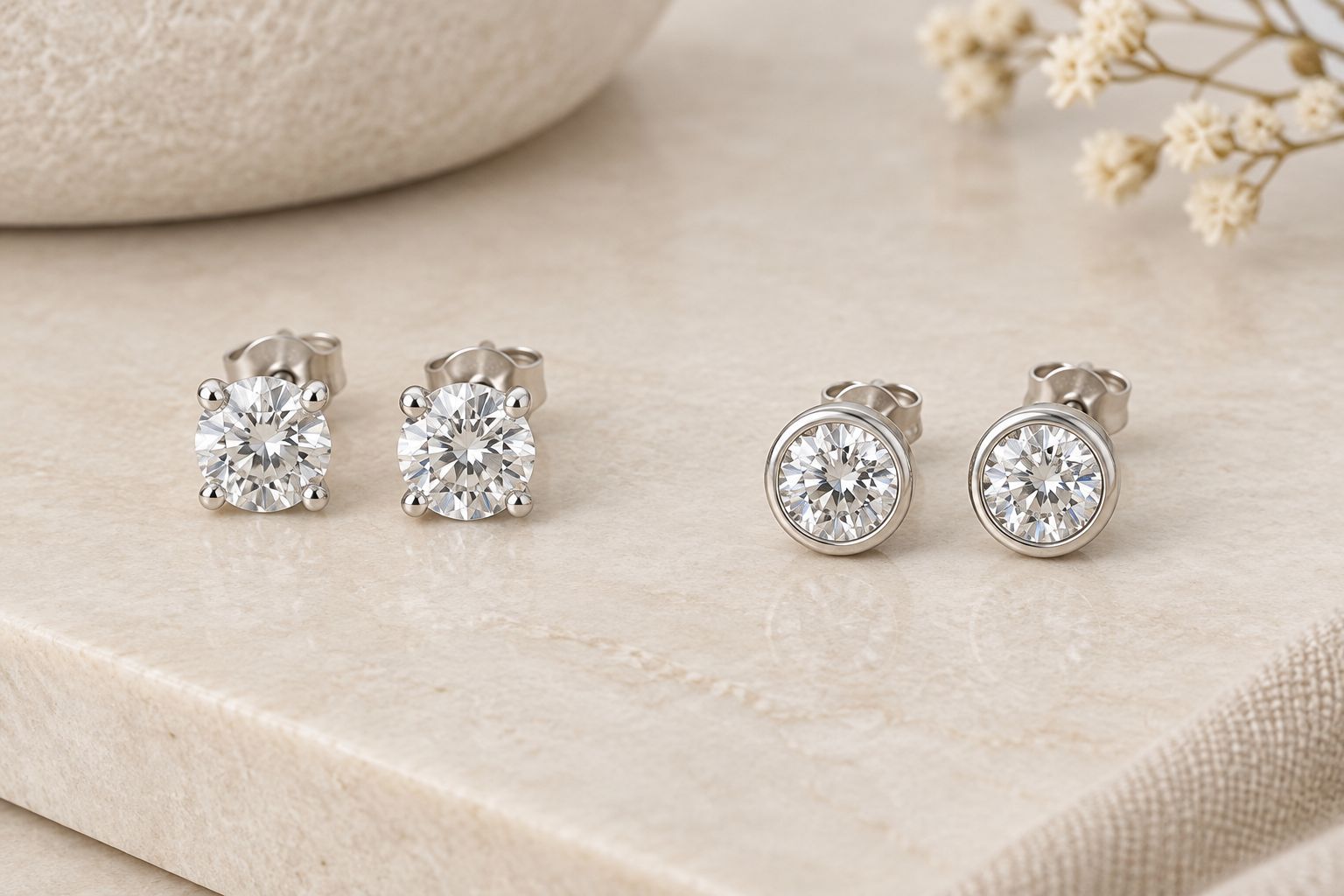
| Round solitaire studs | An undecided gift recipient | Familiar circular outline with one main diamond per ear | Prong configuration and setting height affect wearability |
| Bezel-set studs | A clean, framed look | Metal surrounds the diamond’s edge | The metal rim changes the visible outline |
| Natural diamond studs | A recipient who values geological origin | Diamonds formed naturally rather than grown in a laboratory | Origin does not establish cut quality or matching |
| Princess-cut studs | Someone who favors geometric jewelry | Square outline with distinct corners | Corner protection needs attention |
| Halo diamond studs | Someone who likes decorative sparkle | Smaller diamonds frame a center stone | More stones and settings need inspection and cleaning |
These recommendations answer different questions. Start with the recipient’s taste, then compare the details within that route; do not assume a higher position means every pair in that category is better made.
1. A 2 ctw lab-grown pair: best diamond studs for milestone gifting
Balacia’s 2 ctw lab diamond stud earrings are a starting point when your brief is a lab-grown diamond gift with a clearly identified total weight. The stated 2 ctw refers to combined diamond weight, not automatically the weight of each earring. Check the actual stone breakdown before making that assumption.
Best for: A birthday, anniversary, or other milestone where the recipient wants lab-grown diamond studs.
2 ctw lab-grown pair pros:
- Gives your search a specific total-weight reference.
- Fits a preference for lab-grown rather than natural diamonds.
- Keeps the gift within the classic stud-earring category.
2 ctw lab-grown pair cons:
- Total carat weight does not tell you how the earrings sit on the ear.
- Diamond origin does not establish color, clarity, or cut quality.
- A prominent pair is not the right choice for every minimalist wearer.
Before choosing this pair in 2026, confirm stone shape, dimensions, metal, backs, and documentation. Hold until the exact details match your recipient’s preferences; buy when they do.
2. Round solitaire studs: best diamond studs for an undecided recipient
Round solitaire studs put one main diamond at the center of each earring without a decorative surrounding cluster. Their circular outline makes them an approachable choice when you know the recipient likes diamond jewelry but cannot confidently name a more specific style.
Best for: A first pair of diamond studs or a gift recipient whose jewelry is simple and traditional.
Round solitaire pros:
- The diamond remains the visual focus.
- A circular outline avoids committing to a strongly geometric style.
- The simple design is easy to compare across different settings.
Round solitaire cons:
- An exposed setting still needs inspection for loose or damaged prongs.
- A tall setting or unsuitable backing can affect how the earring sits.
Ask for a front view and a side view. The front shows the diamond’s outline; the side shows how far the setting projects from the ear. Buy round solitaire studs as the default when the recipient’s preferred diamond shape is unknown.
3. Bezel-set studs: best diamond studs for a clean, framed look
Bezel-set diamond studs surround the stone’s edge with metal rather than relying only on separate prongs. That frame becomes part of the design, giving the earrings a defined outline. Choose this style because the recipient likes the look, not because a bezel makes an earring maintenance-free.
Best for: Someone whose jewelry favors smooth outlines and visible metal around the stones.
Bezel-set pros:
- The metal rim makes the setting itself a design feature.
- The diamond’s edge sits within a surrounding frame.
- A full bezel avoids exposed prong tips around the stone.
Bezel-set cons:
- The rim covers part of the diamond’s perimeter.
- Cleaning access depends on the construction beneath the stone.
- A substantial frame can dominate a delicate diamond.
Look closely at the balance between metal and stone. A recipient who loves barely visible settings might prefer a solitaire instead. Buy bezel-set studs for the framed aesthetic; skip them when the recipient wants minimal visible metal.
4. Natural diamond studs: best for a recipient who values origin
Natural diamond studs contain diamonds formed through geological processes rather than laboratory growth. That distinction matters when the recipient specifically wants natural diamonds. It does not replace the need to assess the pair’s appearance, construction, and documentation.
Best for: Someone who has explicitly expressed a preference for natural diamonds.
Natural diamond pros:
- Meets a specific preference for geological origin.
- Allows you to choose shape and setting separately from origin.
- Can carry personal meaning for a recipient who values that distinction.
Natural diamond cons:
- Natural origin alone does not guarantee attractive light performance.
- A natural diamond label does not establish that two stones match.
Lab-grown diamonds are diamonds, not the same category as diamond simulants such as cubic zirconia. For a 2026 gift, ask which origin the recipient wants rather than turning the decision into a contest over which choice is more romantic. Buy natural diamond studs when natural origin is part of the recipient’s brief.
5. Princess-cut studs: best for geometric jewelry lovers
Princess-cut diamond studs have a square outline that feels different from a round solitaire. They suit someone who repeatedly chooses angular jewelry, structured shapes, or square stones. Examine the corners and how the setting protects them.
Best for: A recipient with a clear preference for square or angular jewelry.
Princess-cut pros:
- Provides a distinctly geometric alternative to round studs.
- Makes the stone shape a central design feature.
- Gives you a clear style match when the recipient already wears square stones.
Princess-cut cons:
- Exposed corners are vulnerable points that need suitable protection.
- Square styling is a more specific taste commitment than a circular outline.
Compare both earrings face-up, including their orientation within the settings. Matching weight is not enough if the pair looks uneven. Buy princess-cut studs for a known geometric preference; skip them as a blind gift choice.
6. Halo studs: best for a decorative, sparkling look
Halo diamond studs surround a center stone with smaller diamonds. The surrounding stones contribute to the overall outline, so the earrings’ total width is not the same as the center diamond’s width. This style is for someone who enjoys a more decorated piece rather than a single-stone look.
Best for: A recipient who wears detailed jewelry and likes a framed diamond design.
Halo stud pros:
- Adds diamond detail around the center stone.
- Creates a decorative outline without changing the center stone’s shape.
- Offers a different visual character from a plain solitaire.
Halo stud cons:
- More stones and settings require attention during cleaning and inspection.
- Total carat weight can include the halo, not just the center diamonds.
Ask for the center-stone weight separately from the earrings’ combined weight. Buy halo studs for a recipient who likes decorative jewelry; skip them when simplicity is the priority.
Read carat weight without confusing it with size
A metric carat equals 0.2 grams. Carat weight therefore describes mass, while millimeter measurements describe physical dimensions. Two diamonds of the same weight can have different face-up dimensions because their shapes and proportions differ.
For a simple two-stone pair totaling 2 ctw, an even split would mean 1 ct per diamond. That arithmetic is not proof that a particular pair is evenly split, nor does it apply unchanged to earrings with additional halo diamonds.
When comparing diamond stud earrings in 2026, keep these checks separate:
- Total weight: How much do all the diamonds weigh together?
- Individual weights: How is that weight divided between the earrings and their stones?
- Dimensions: What are the measurements of the main diamonds and finished earrings?
- On-ear appearance: Does the pair look balanced on the recipient’s ear?
Choose visible proportions and comfortable fit before chasing a larger total weight. A smaller-looking pair that suits the wearer is a better gift than an imposing pair that stays in its box.
How these recommendations are ranked
The ranking prioritizes a clear use case, matched appearance, wearable proportions, suitable metal, practical fastening, and verifiable diamond details. It separates a specific catalog option from general styles so you can distinguish a shopping starting point from a design recommendation.
Balacia’s identified lab-diamond pair comes first for milestone shoppers seeking 2 ctw earrings. Round solitaires remain the overall default for an undecided recipient; the other styles win only when their particular design or origin matches the wearer’s preferences.
Which diamond stud earrings should you choose?
Choose round solitaire studs if you are undecided. They give you a straightforward design to evaluate without adding a halo, a substantial metal frame, or a strongly angular shape.
For your 2026 gift shortlist, move away from that default only for a reason you can name: a lab-grown preference, natural origin, a framed bezel, square geometry, or decorative detail. Then confirm the pair’s exact specifications rather than transferring assumptions from another listing.
Before ordering, check the recipient’s preferred metal, fastening style, and tolerance for prominent earrings. Review the seller’s current purchase terms directly. Sentiment makes the gift meaningful; these practical checks help make it wearable.
FAQ
What are the best diamond stud earrings for a first pair?
Round solitaire diamond stud earrings are the default recommendation for a first pair when the recipient’s preferred shape is unknown. Confirm metal, setting height, backs, and on-ear proportions before choosing.
Are Balacia’s 2 ctw lab diamond studs a good milestone gift?
Balacia’s 2 ctw lab diamond stud earrings are a relevant starting point for someone seeking a lab-grown diamond milestone gift. Confirm the actual stone breakdown, materials, dimensions, and fastening before deciding whether the pair suits the recipient.
Does 2 ctw mean each diamond earring is 2 carats?
No. A 2 ctw designation refers to combined diamond weight; a simple pair with two equally weighted diamonds would have 1 ct per diamond. Additional diamonds, including halos, can contribute to the total.
Are lab-grown diamond studs real diamonds?
Yes, lab-grown diamonds are diamonds rather than diamond simulants. Laboratory growth describes their origin; it does not by itself establish the quality or appearance of a particular pair.
Are bezel-set diamond studs better than prong-set studs?
Bezel-set studs are better for someone who wants a visible metal frame, while prong-set studs suit someone who prefers less metal around the diamond. Neither setting removes the need for inspection, cleaning, and a suitable fastening.
Should I choose natural or lab-grown diamonds for a gift?
Choose the origin the recipient prefers. If that preference is unknown, ask before purchasing rather than assuming natural or lab-grown diamonds carry more personal meaning.
What should I check when buying diamond stud earrings online in 2026?
Check diamond origin, individual and total weights, dimensions, metal, setting construction, backs, and documentation for the actual pair. Use both front and side views to assess the earrings, and review the seller’s current purchase terms.
One last thing
The back of an earring deserves as much attention as the front. Ask how it attaches, how it supports the stud, and whether the recipient can comfortably operate it; a fastening they dislike can keep even a thoughtful gift unworn.
For a surprise, notice the backs on the earrings they already choose most often. That small observation tells you something useful without asking them to select their own gift.