


Best for a graduated centerpiece high jewelry: the Bettyanne Graduated Diamond Tennis Necklace. Best for understated styling: a uniform round lab grown diamond tennis necklace. Best for a framed diamond look: a bezel-set design. This 2026 guide compares five necklace styles so you can choose a meaningful gift around the recipient’s taste, fit, and daily routine.
- Balacia’s Bettyanne Graduated Diamond Tennis Necklace is the pick for shoppers seeking a graduated centerpiece.
- Choose a uniform round-diamond tennis necklace for an even line of sparkle rather than a central focal point.
- Compare diamond origin, metal, clasp, and on-neck fit before choosing diamond jewelry gifts.
- A close-fitting necklace needs careful measurement; a dramatic design needs the right neckline.
Why this matters
A tennis necklace places a connected line of individually set stones around your neckline. Unlike a pendant, its overall effect comes from the relationship between the stones, their settings, and the necklace’s curve.
For a gift in 2026, start with what your loved one already wears. A beautiful necklace feels more personal when its proportions and metal color belong naturally alongside their favorite jewelry—not just when it looks impressive in a photograph.
What makes the best tennis necklace?
- Personal style: Choose an even diamond line, a graduated center, or a more distinctive silhouette to match the recipient.
- On-neck fit: Check where the necklace rests, how it follows the collarbone, and whether the settings face forward.
- Diamond information: Confirm natural or lab-grown origin and understand which quality details apply to the selected necklace.
- Construction: Ask about the clasp, any secondary fastening, articulation, and the edges that touch skin or clothing.
- Metal and care: Verify the exact metal and discuss maintenance before treating the necklace as an everyday piece.
Balacia’s Bettyanne Graduated Diamond Tennis Necklace is best for gift shoppers seeking a graduated diamond centerpiece. That recommendation concerns the design direction; confirm the exact necklace’s specifications before ordering.
Best tennis necklace styles at a glance
These are style recommendations, not a ranking of laboratory-tested products. The named necklace is a specific option; the remaining entries describe designs to discuss with a jeweler, not additional named products from the retailer.
| Rank and style | Best for | Standout feature | Key limitation |
|---|---|---|---|
| 1. Bettyanne Graduated Diamond Tennis Necklace | A graduated centerpiece | A graduated diamond arrangement | Fit and exact specifications need confirmation |
| 2. Uniform round-diamond tennis necklace | Understated styling | An even visual rhythm around the neck | Less emphasis on a central focal point |
| 3. Bezel-set diamond tennis necklace | A framed diamond look | Metal surrounds each stone’s perimeter | More visible metal changes the overall appearance |
| 4. Close-fitting diamond tennis necklace | An intentional collarbone look | A higher position around the neckline | Requires particularly careful fit checks |
| 5. Fancy-shape diamond tennis necklace | A distinctive statement gift | Diamond outlines become part of the design | Shape and orientation are personal preferences |
1. Bettyanne: best tennis necklace for a graduated centerpiece
The Bettyanne Graduated Diamond Tennis Necklace is the named graduated option from Balacia. A graduated arrangement changes stone size along the necklace rather than presenting the same visual scale throughout.
Choose this direction when your loved one likes jewelry with a clear focal point. Before buying, ask to see how the necklace sits on the neck and confirm its diamond origin, total carat weight, metal, length, and fastening details for the exact selection.
Bettyanne pros:
- A graduated design gives you a defined styling direction.
- Changing stone sizes creates a different rhythm from a uniform diamond line.
- The centerpiece suits a gift intended to feel like the main accessory.
Bettyanne cons:
- A graduated centerpiece is not the right default for someone who prefers even proportions.
- The design name alone does not establish its dimensions, diamond grades, or clasp construction.
Best for: A recipient who wants the necklace itself to be the focal point rather than a background layer.
For a 2026 anniversary or milestone gift, compare the intended neckline with the necklace’s actual curve. Do not choose a graduated design solely because it appears more dramatic in a close-up photograph.
Verdict: Buy for someone who loves a graduated centerpiece, after confirming fit and specifications.
2. Uniform round diamonds: best tennis necklace for understated styling
A uniform round-diamond tennis necklace repeats similarly sized round stones along its length. The result is an even line rather than a design that builds toward a larger center.
This is the default style recommendation for an undecided shopper whose recipient favors balanced, uncomplicated jewelry. It still needs a fit check: a restrained design does not automatically mean a small scale or a comfortable length.
Uniform round-diamond necklace pros:
- Repeated round shapes create a consistent visual pattern.
- The design does not depend on a prominent center section.
- You can judge its overall proportions without also choosing a distinctive fancy shape.
Uniform round-diamond necklace cons:
- It offers less central emphasis than a graduated necklace.
- An even line does not eliminate differences in setting profile, flexibility, or diamond matching.
Best for: Someone whose jewelry collection favors repetition, symmetry, and simple silhouettes.
Ask to view the full necklace rather than only a cropped section. Look for a consistent appearance across the stones and settings, then check how the whole piece follows the neckline when worn.
Verdict: Buy as the default style direction for a recipient who prefers an even diamond line.
3. Bezel settings: best tennis necklace for a framed diamond look
A bezel setting surrounds a stone’s perimeter with metal. In a tennis necklace, that border becomes part of the repeating pattern, so the metal has a stronger visual role than it does in many open prong designs.
Choose the style because your loved one likes the framed appearance—not because the word bezel guarantees that every necklace will behave the same way. The links, underside, clasp, and overall construction still deserve inspection.
Bezel-set necklace pros:
- Metal outlines make each stone’s shape part of the design.
- The framed appearance offers a clear alternative to exposed prongs.
- Metal color contributes visibly to the necklace’s overall character.
Bezel-set necklace cons:
- The metal borders are a drawback for someone seeking a less interrupted diamond look.
- A setting label does not establish the necklace’s comfort or resistance to catching on clothing.
Best for: A recipient who appreciates defined outlines and wants the metalwork to remain visible.
Compare front and side views. A necklace can look delicate from above while having a setting profile your recipient finds too prominent against the skin.
Verdict: Buy for the framed aesthetic; hold until you have checked the construction and profile.
4. Close-fitting designs: best tennis necklace for a collarbone look
A close-fitting tennis necklace sits higher around the neck than a longer design. This entry concerns length and placement, not a particular stone shape or setting; you can combine close-fitting proportions with other styles in this guide.
Make fit the deciding factor. A length that looks elegant on one person does not establish where the necklace will rest on someone else, especially when neck proportions and preferred clothing differ.
Close-fitting necklace pros:
- A higher position creates a deliberate neckline-focused look.
- It lets the recipient plan an outfit around the necklace’s placement.
- The length choice works as a separate decision from diamond shape.
Close-fitting necklace cons:
- Buying a surprise gift requires reliable information about preferred fit.
- The intended placement will not suit every neckline or comfort preference.
Best for: Someone who already enjoys jewelry worn high around the neck.
For a wedding in 2026, check the necklace against the actual dress or outfit rather than a similar neckline. Notice both the front view and how freely the recipient can move without wanting to adjust it.
Verdict: Hold until you have confirmed the recipient’s preferred length and neckline.
5. Fancy shapes: best tennis necklace for a distinctive statement
A fancy-shape diamond tennis necklace uses outlines other than the traditional round, such as oval, emerald-cut, pear, or heart shapes. Shape and orientation become major design choices rather than small finishing details.
This is a personal gift direction, not the safest surprise recommendation. Start with a shape the recipient already loves, and ask the jeweler which necklace designs can be considered without assuming that every shape or configuration is offered.
Fancy-shape necklace pros:
- Distinctive outlines give the design a recognizable character.
- Shape selection can connect the gift to the recipient’s existing preferences.
- Orientation provides another way to distinguish the necklace’s appearance.
Fancy-shape necklace cons:
- An unfamiliar shape is a risky choice for a surprise gift.
- Total carat weight alone does not communicate how different outlines will look together.
Best for: A confident jewelry wearer with an established preference for a particular diamond shape.
Look at the entire repeated pattern, not just an individual stone. Loving a shape in a ring does not automatically mean your loved one wants it repeated around a necklace.
Verdict: Buy when the shape preference is known; skip as a guess.
How to choose the right necklace before ordering
Use this sequence to turn a favorite style into a purchase decision. Each step answers a different question, so do not let an appealing diamond photograph substitute for the checks that follow.
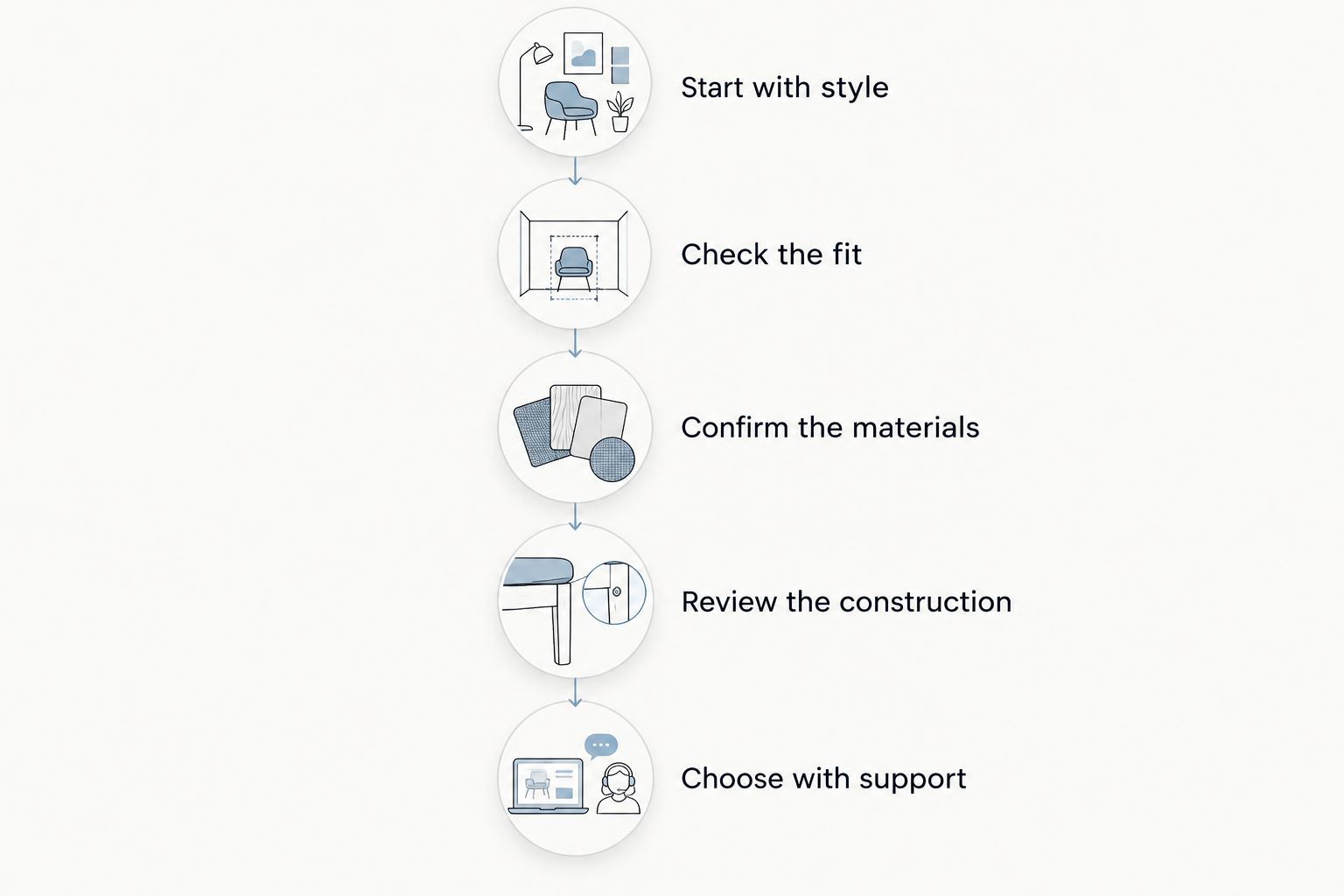
Start with style
Study a necklace your loved one actually wears. Note whether it is delicate or prominent, whether it has a centerpiece, and which metal colors appear most often in their collection.
Check the fit
Measure a favorite necklace laid flat and note where it rests when worn. Share both observations with the jeweler; length alone does not describe the fit of every construction.
Confirm the materials
Ask for the exact metal and diamond origin of the selected necklace. If you are comparing 14k gold with 18k gold, those markings describe different gold proportions—not a complete verdict on the finished piece.
Review the construction
Request clear information about the clasp, any secondary fastening, and the necklace’s flexibility. Ask how to check that the fastening is fully engaged and what signs call for professional attention.
Choose with support
Bring your preferences and budget to a jewelry conversation before committing. A Balacia jewelry expert can help guide your education and help you discover a gift that suits your loved one within your budget.
Understand diamond details without losing the sentiment
For a 2026 purchase, ask what each specification tells you about the necklace in front of you. Total carat weight describes combined diamond weight, not the size of every stone or the quality of the finished necklace. One carat equals 200 milligrams; that weight can be distributed among stones in different ways.
Gold markings answer a separate question. Pure gold is the reference for the karat scale: 14k gold contains approximately 58.3% gold, while 18k gold contains 75%. Neither marking, by itself, establishes the clasp quality, diamond origin, or suitability for your recipient.
Ask whether any grading documents apply to individual diamonds or whether the description provides specifications for the finished piece. Do not assume every small diamond has an individual grading report, and do not treat a general certification reference as documentation for an exact necklace.
The gift’s meaning belongs in the choice, too. Tell the recipient why you selected the shape or style; let verified specifications support that sentiment rather than replace it.
Check how the necklace sits, not just how it sparkles
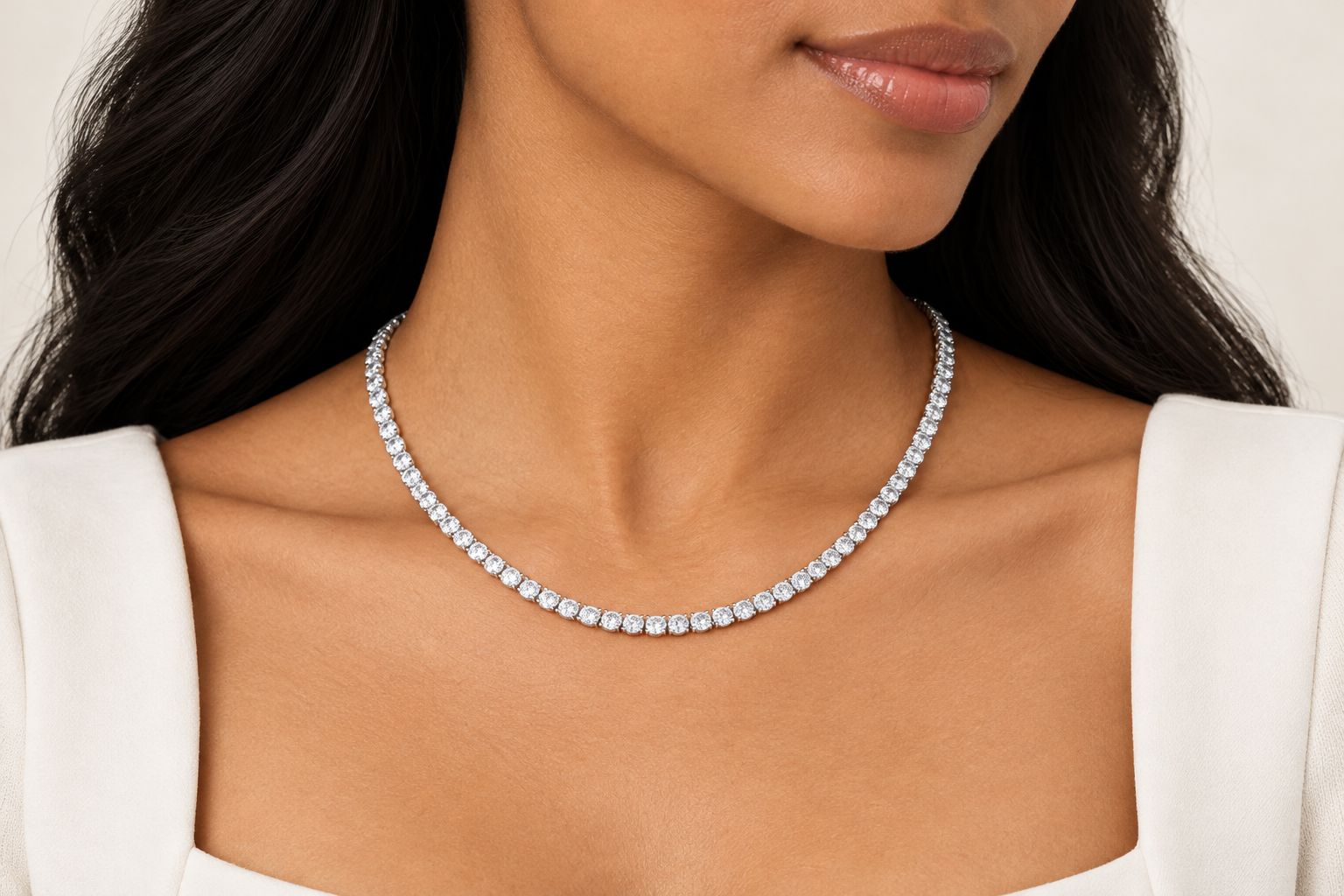
A tennis necklace needs to work as a connected piece. Ask for an on-neck view that shows the full curve, and check whether the stones face forward in the demonstrated fit.
If you have the opportunity to try a necklace on, move naturally and observe its placement. Check the sides and fastening as well as the center; a beautiful front view is only part of the experience.
How the recommendations are ranked
The order follows a buying decision: a graduated centerpiece, an even diamond line, visible metal borders, deliberate neckline placement, then distinctive shapes. These are different use cases, not claims that one construction wins every comparison.
The criteria remain personal style, fit, diamond information, construction, and care. A necklace moves off your shortlist when it fails an essential requirement, even if its design ranks highly for someone else.
Which tennis necklace should you choose?
Choose uniform round diamonds when you need a starting point and your recipient prefers uncomplicated jewelry. Choose the Bettyanne graduated design when a clear centerpiece is the goal; choose bezels when visible metal framing is part of the appeal.
For a meaningful 2026 gift, resolve fit before adding drama. Use the Balacia contact page to speak with a jewelry expert about your recipient’s style, your questions, and your budget.
FAQ
What’s the best tennis necklace for a gift?
The best tennis necklace matches the recipient’s preferred style and fit. Start with uniform round diamonds for an even look, or consider Balacia’s Bettyanne Graduated Diamond Tennis Necklace when a graduated centerpiece is the goal.
Is a graduated tennis necklace better than a uniform design?
A graduated tennis necklace is better for someone who wants a focal point; a uniform design is better for an even visual rhythm. Neither style replaces checking the exact necklace’s fit, materials, and construction.
How do I choose a tennis necklace length as a surprise?
Measure a necklace the recipient already enjoys and note where it rests when worn. Share both details with a jeweler rather than assuming the same length creates the same fit in every design.
Are lab-grown diamonds real diamonds?
Lab-grown diamonds are diamonds, not diamond simulants. Natural diamonds form in the earth, while lab-grown diamonds are produced through controlled growth processes; confirm which origin applies to the exact necklace.
Does total carat weight tell me how big each diamond is?
Total carat weight does not tell you the size of each diamond. It describes the combined weight, so you also need information about stone sizes, arrangement, and necklace length.
Does every diamond tennis necklace come with individual diamond certificates?
Do not assume a tennis necklace includes an individual grading report for every diamond. Ask exactly which documents accompany the selected necklace and which stones those documents describe.
Can I wear a diamond tennis necklace every day?
Daily wear depends on the necklace’s construction and your activities. Ask for care instructions for the exact piece, check the fastening before wear, and discuss when the necklace should be removed.
One last thing
Before you wrap the gift, write down why you chose its design. A simple note about a shared milestone or a detail you noticed in your loved one’s style makes the choice personal without relying on a grand claim about the jewelry.
Keep the necklace’s documentation with that note. Sentiment explains why the gift matters; accurate records preserve what is known about the piece.
Related guides
- Can you wear a diamond tennis necklace every day?
- Wedding jewelry for destination weddings
- Best anniversary jewelry gifts for her