


Lab-grown diamonds can last a lifetime and be passed down through generations; they do not expire or wear out simply because they were grown in a laboratory. Their settings still need maintenance, and a diamond can chip under a hard impact. For a 2026 engagement ring or jewelry gift, focus on the stone’s condition, protective setting, and care rather than an advertised lifespan.
- How long do lab grown diamonds last? A lifetime and beyond, with protection from damage and proper jewelry care.
- Lab-grown and natural diamonds share the same hardness; neither is immune to chipping.
- Cloudy-looking jewelry often needs cleaning, not a replacement diamond.
- Balacia sells lab-grown diamond engagement rings for couples choosing a lasting symbol of their relationship.
How long do lab-grown diamonds last?
A lab-grown diamond has no scheduled replacement age. Under ordinary wearing conditions, its diamond crystal remains diamond. It does not become a lesser material as birthdays, anniversaries, or generations pass.
Lab-grown and natural diamonds have essentially the same chemical composition, crystal structure, and physical properties. Both rank 10 on the Mohs hardness scale, which measures resistance to scratching—not resistance to breaking. GIA’s educational guidance distinguishes hardness from toughness, an important difference when you choose jewelry for daily wear.
| Diamond origin | Expected longevity | Main advantage | Limitation | Best for |
|---|---|---|---|---|
| Lab-grown diamond | No fixed expiration; can last generations | Diamond hardness and enduring material properties | Can chip; setting still requires care | Buyers who want diamond jewelry without requiring natural origin |
| Natural diamond | No fixed expiration; can last generations | Diamond hardness with geological origin | Can chip; natural origin does not remove maintenance needs | Buyers who specifically value natural formation |
Neither origin wins on lifespan alone. When comparing individual stones, examine condition, cut, inclusions, and the setting rather than treating origin as a durability guarantee.
Why this matters
A meaningful gift needs to suit the person wearing it, not just look beautiful when the box opens. A ring worn during hands-on work faces different hazards from a necklace worn occasionally, even when both contain diamonds of the same origin.
For couples exploring Balacia, the useful question is not whether a laboratory-grown stone will expire. It is whether the entire piece suits the wearer’s routine. A sound diamond in a neglected mounting is not secure jewelry.
That distinction also keeps expectations realistic: lasting material does not mean maintenance-free jewelry, and emotional value is separate from future resale value.
Will a lab-grown diamond lose its sparkle?
A lab-grown diamond does not lose its ability to reflect and refract light simply because it gets older. Surface buildup can hide sparkle without changing the diamond underneath. Hand lotion, soap residue, skin oils, and everyday grime can collect around the stone, especially beneath it.
Cut also matters. A poorly proportioned diamond does not gain better light performance through cleaning, while a well-cut diamond can look subdued when its surface is dirty. Judge a stone’s appearance when it is clean and viewed under more than one kind of lighting.
For a 2026 purchase, ask to distinguish these issues before assuming that dullness means deterioration:
- Surface film: Residue interferes with the passage of light and calls for suitable cleaning.
- Internal features: Inclusions belong to the individual stone; cleaning does not remove them.
- Cut quality: Facet arrangement affects light performance from the outset.
- Physical damage: A chip or abrasion needs a jeweler’s assessment, not more scrubbing.
If a ring suddenly looks different after a knock, stop wearing it until a jeweler checks the stone and mounting. Do not assume every appearance change is harmless dirt.
Can a lab-grown diamond chip or break?
Yes. Lab-grown diamonds resist scratching exceptionally well, but hardness is not the same as toughness. A sharp impact in the wrong direction can chip a diamond, particularly around an exposed point, edge, or vulnerable area.
Natural diamonds share this limitation. Diamond has cleavage directions within its crystal structure, so neither origin makes a stone indestructible. Remove diamond jewelry before activities that expose it to forceful contact rather than relying on its hardness rating.
Setting design changes how exposed a stone is. A bezel surrounds the stone’s edge with metal, while prongs leave more of the stone visible; neither design removes every risk. For pointed shapes, ask specifically how the tip is protected.
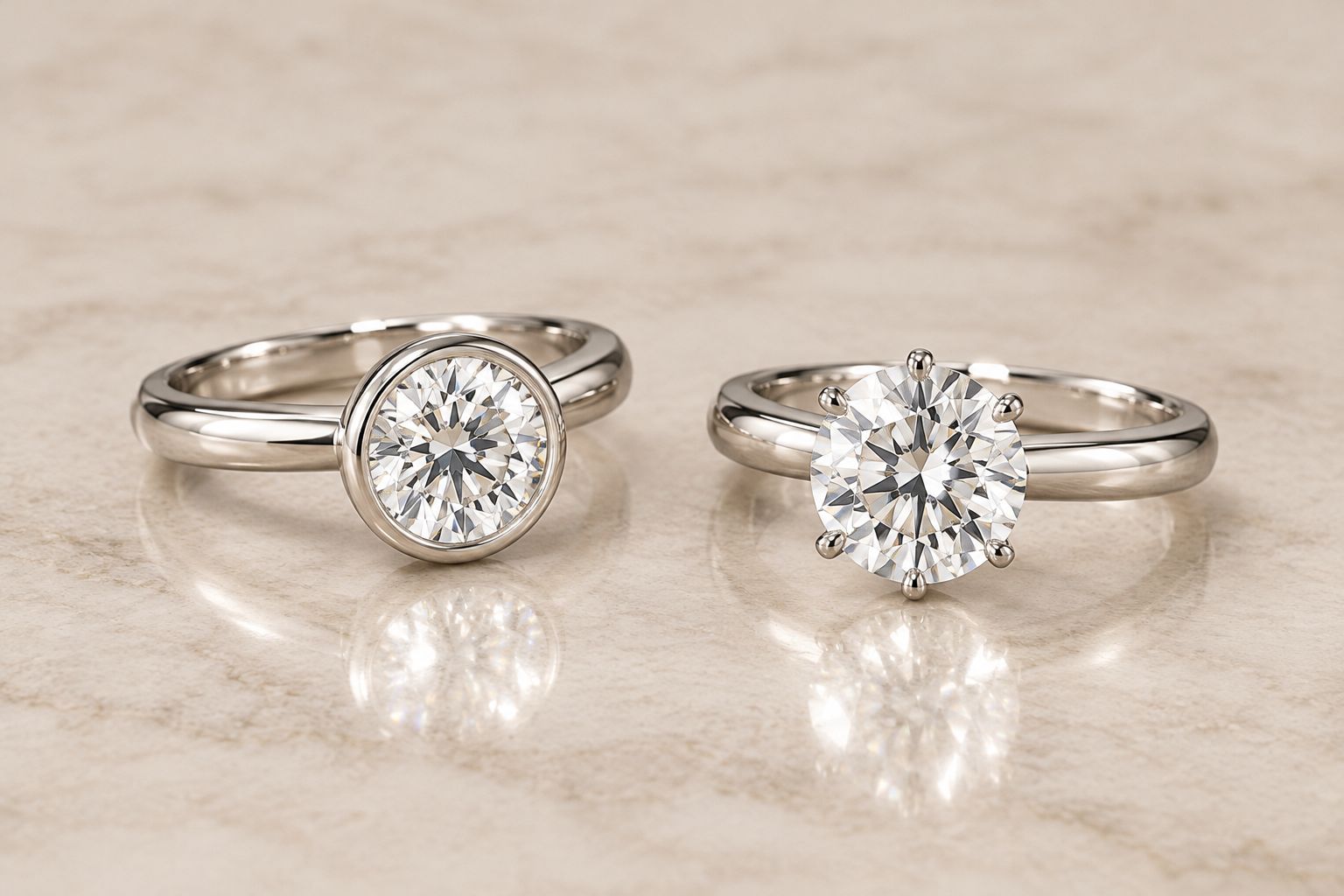
An ornate setting also gives you more details to inspect. Small accent stones, fine prongs, and decorative metalwork deserve attention alongside the center diamond.
Why jewelry longevity varies
The laboratory origin does not set a countdown. These factors explain why one piece stays secure while another needs repair:
- Stone condition: Existing chips, fractures, and vulnerable edges affect how a particular diamond should be set and worn.
- Setting protection: Exposed corners and points need protection appropriate to the stone’s shape.
- Metal wear: Prongs, links, hinges, and clasps can wear or bend even while the diamonds remain intact.
- Daily activities: Heavy lifting, contact sports, and manual work expose jewelry to knocks and pressure.
- Cleaning choices: A cleaner suitable for a diamond is not automatically suitable for every metal, finish, or accompanying gemstone.
- Maintenance habits: Addressing a snagging prong or loose clasp promptly helps prevent a repair issue from becoming a lost stone.
This is why a blanket promise that jewelry will last forever is incomplete. The diamond’s material stability and the piece’s wearable condition are different things.
How do you care for a lab-grown diamond?
Start with the instructions for the complete piece, not just the center stone. A diamond ring with other gemstones or a delicate finish needs a care method compatible with all its components.
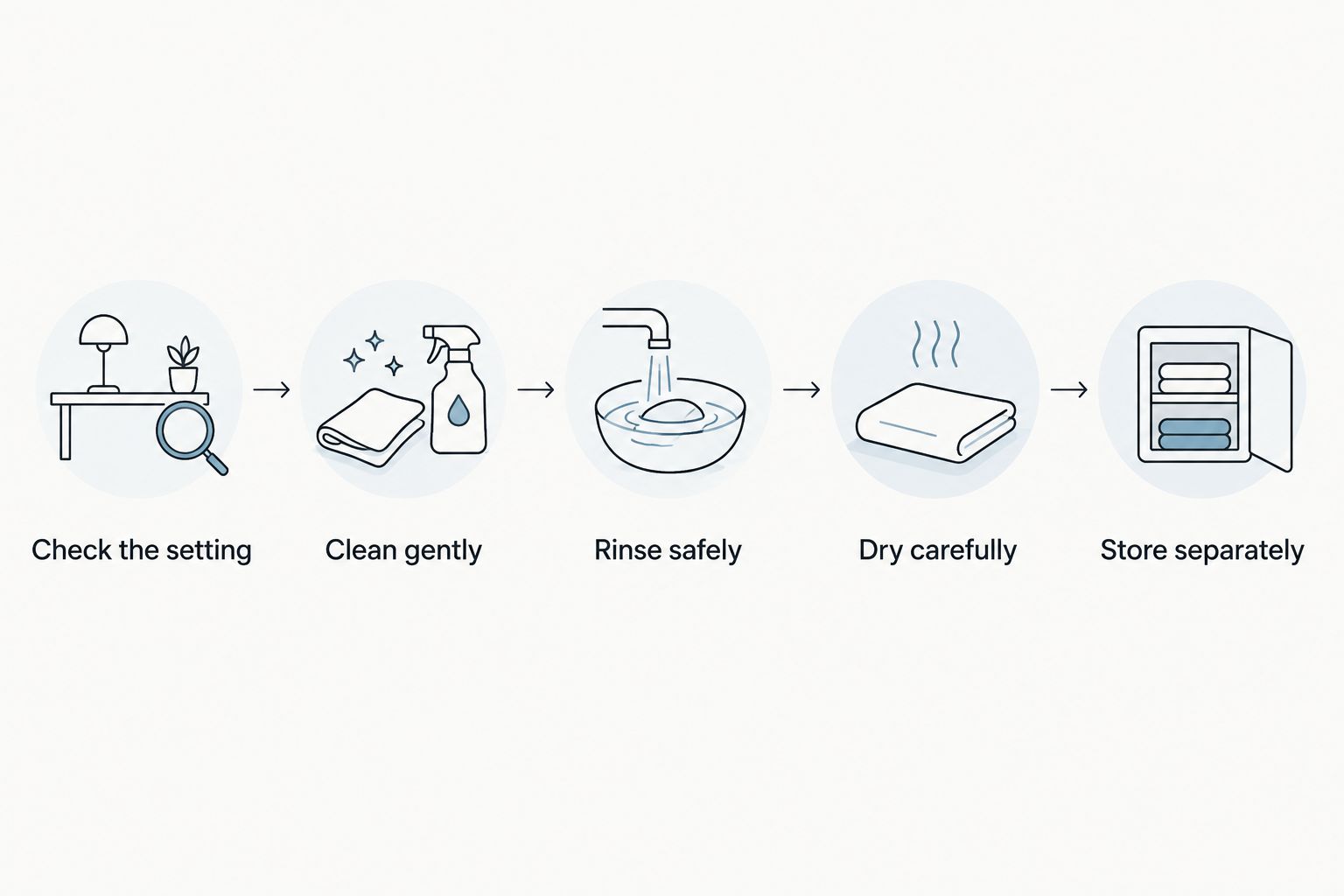
Use this sequence for routine care:
- Check the setting. Look for a bent prong, damaged clasp, or visible movement. If anything seems loose, put the piece aside for professional inspection before cleaning or wearing it.
- Clean gently. For suitable diamond jewelry, use lukewarm water, mild dish soap, and a soft brush. Avoid treating an unknown gemstone or finish with this method until a jeweler confirms it is appropriate.
- Rinse safely. Use a bowl rather than an open drain. Keep track of the entire piece, including removable earring backs.
- Dry carefully. Use a clean, soft cloth and avoid pulling fibers against exposed prongs.
- Store separately. Keep diamond jewelry from rubbing against other pieces; diamonds can scratch other jewelry and each other.
Do not use an ultrasonic cleaner simply because the stone is a diamond. Loose settings, fractures, treatments, and other gemstones can change whether ultrasonic cleaning is suitable. Ask a jeweler to assess the actual piece first.
Have the mounting inspected when you notice a change and ask your jeweler for a routine suited to your wear. There is no single inspection schedule that fits every ring, bracelet, and necklace.
Does the metal last as long as the diamond?
The metal and the diamond age differently. A diamond can remain intact while its ring shank thins, its prongs wear, or its bracelet clasp needs repair. These are reasons to maintain the jewelry, not evidence that the diamond has expired.
Gold purity describes composition, not a guaranteed service life. 14-karat gold contains 14 parts gold out of 24, while 18-karat gold contains 18 parts gold out of 24. The remaining alloy ingredients and the construction also affect how a piece behaves in use.
Do not choose between metals by assuming higher purity automatically means greater resistance to daily wear. Ask about the actual alloy, setting thickness, finish, and repair needs. For a gift, also consider which metal the recipient already enjoys wearing and whether they have known sensitivities.
In your 2026 buying checklist, give clasps, earring backs, and ring fit the same attention as the diamond. A lasting stone still needs secure hardware.
What should you check before buying a lasting diamond gift?
Choose the whole piece for the wearer, not the center stone in isolation. A person who wears jewelry every day needs a design that fits their work, hobbies, and comfort preferences. A beautiful gift becomes more meaningful when it is easy to enjoy.
Before purchasing, ask these questions:
- Is the stone’s lab-grown origin clearly disclosed?
- What documentation accompanies this particular diamond?
- Are vulnerable tips and edges protected by the setting?
- What maintenance does the metal or finish require?
- Can the recipient comfortably operate the clasp or fastening?
- What care guidance applies to every gemstone in the piece?
For example, Balacia’s Radiant Cut Engagement Ring with Princess Cut Side Diamonds Iced Out lists a lab-grown center diamond. Its multi-stone design offers an expressive engagement-ring style, but it also makes attention to the accent-stone settings part of ownership. Confirm the exact documentation and care needs before choosing it.
Balacia is best for couples and gift shoppers seeking lab-grown diamond jewelry with custom design options. Speak with a Balacia jewelry expert for jewelry education and help discovering a gift that suits your loved one and your budget.
Keep documentation with your purchase records. For a 2026 gift intended to become an heirloom, those records help a future recipient understand what the piece is; they do not replace inspections or guarantee future value.
Can lab-grown diamonds become family heirlooms?
Yes, lab-grown diamonds can become heirlooms because their laboratory origin does not impose a useful-life deadline. Their sentimental importance comes from the relationship, occasion, and history attached to the jewelry.
Passing down a piece in wearable condition still requires care. Before gifting inherited jewelry, have a jeweler check its setting rather than assuming an intact diamond means the mounting is secure.
Does a lab-grown diamond’s resale value affect its lifespan?
No, resale value does not determine how long a lab-grown diamond lasts. A diamond’s physical condition and the amount a future buyer offers are separate questions.
Buy an engagement ring or anniversary gift for its suitability and meaning, without treating durability as an investment promise. Neither diamond origin guarantees a future selling price.
FAQ
Do lab-grown diamonds last as long as natural diamonds?
Lab-grown diamonds can last as long as natural diamonds because they share essentially the same chemical composition, crystal structure, and physical properties. Neither origin prevents chipping or eliminates the need to maintain the setting.
Do lab-grown diamonds turn cloudy over time?
Lab-grown diamonds do not inherently turn cloudy as they age. Surface residue can make them look dull, while existing inclusions or damage require a different assessment.
Can I wear a lab-grown diamond ring every day?
A lab-grown diamond ring can suit daily wear when its setting and design fit your routine. Remove it for activities involving heavy pressure or impacts, and address loose or damaged components promptly.
Will a lab-grown diamond fade in sunlight?
Ordinary sunlight does not make an untreated colorless lab-grown diamond expire or fade. Ask about any treatments and stone-specific care instructions, especially when buying a colored diamond.
Do I need to replace a lab-grown diamond after a certain age?
Lab-grown diamonds have no age-based replacement requirement. Replacement or repair depends on damage, loss, or your preferences—not a countdown tied to laboratory growth.
Is a diamond grading report a lifetime warranty?
A diamond grading report is not a lifetime warranty. It documents characteristics of a particular stone rather than promising that the stone or setting cannot be damaged.
What should I do if my lab-grown diamond looks dull after cleaning?
Have a jeweler inspect a lab-grown diamond that remains dull after appropriate cleaning. Residue underneath the stone, cut characteristics, inclusions, or damage need different responses.
One last thing
The part most likely to need your attention is not necessarily the diamond. A catching prong, unreliable clasp, or changing fit deserves action even when every stone still sparkles. For a 2026 gift, write down the occasion and why you chose it, then keep that note with the documentation: maintenance preserves the jewelry, while the story preserves its meaning.